

Dryrobe Comparison Guide 2026: Is the Ultimate Changing Robe Still King?
Is the most recognisable piece of kit on the beach actually the best technical tool for your session, or has the dryrobe simply become a coastal fashion statement? We have all felt that brutal 4-degree wind chill hitting your skin the moment you peel off a 5mm wetsuit in a damp gravel car park. The struggle to stay discreet while shivering through the after-drop is a rite of passage every UK rider knows too well. You need gear that works as hard as you do on the water.
We agree that nothing ruins a classic winter swell faster than a slow, bulky change that leaves you damp for the drive home. That is why we are diving deep into whether the iconic Advance model remains the ultimate investment for 2026. You will discover exactly how it stacks up against the latest technical alternatives in terms of thermal efficiency and packability. From sizing secrets to long term durability after 400 sessions, this expert comparison ensures you choose the right robe to keep the stoke alive between sets.
Key Takeaways
- Understand the technical construction of the dryrobe, from its weather-shield outer shell to the moisture-wicking synthetic lambswool lining.
- Compare the industry leader against rivals like Red Original and Northcore to find the perfect balance of packability and beach-side warmth.
- Master the golden rule of sizing to ensure your changing robe offers enough internal space for a quick, stress-free kit swap.
- Learn how to combat the 'after-drop' and keep your core temperature stable after exiting cold UK waters.
- Get the inside track from rider-owned experts who test this gear in the harshest British conditions to ensure your next session is epic.
What is a dryrobe and why has it become the session essential?
Back in the day, a soggy beach towel was the only thing standing between you and a freezing car park change. That changed in December 2010 when the first technical changing robe hit the scene. According to the Dryrobe on Wikipedia page, the brand pioneered the concept of a weather-resistant shell paired with a synthetic lambswool lining. It transformed the post-surf ritual from a frantic shiver-fest into a comfortable transition. Today, a dryrobe is a staple for coastal explorers and athletes who refuse to let 8-degree North Sea temperatures ruin their day.
The evolution from a basic cotton poncho to a technical weather-shield is massive. Unlike a towel that gets heavy and cold when wet, these robes use a nylon outer shell with a 10,000mm waterproof rating. They block the wind entirely, which is the primary thief of body heat on a blustery UK beach. Whether you are surfacing from a winter swell or finishing a triathlon, this gear acts as a portable basecamp.
The science of staying warm post-session
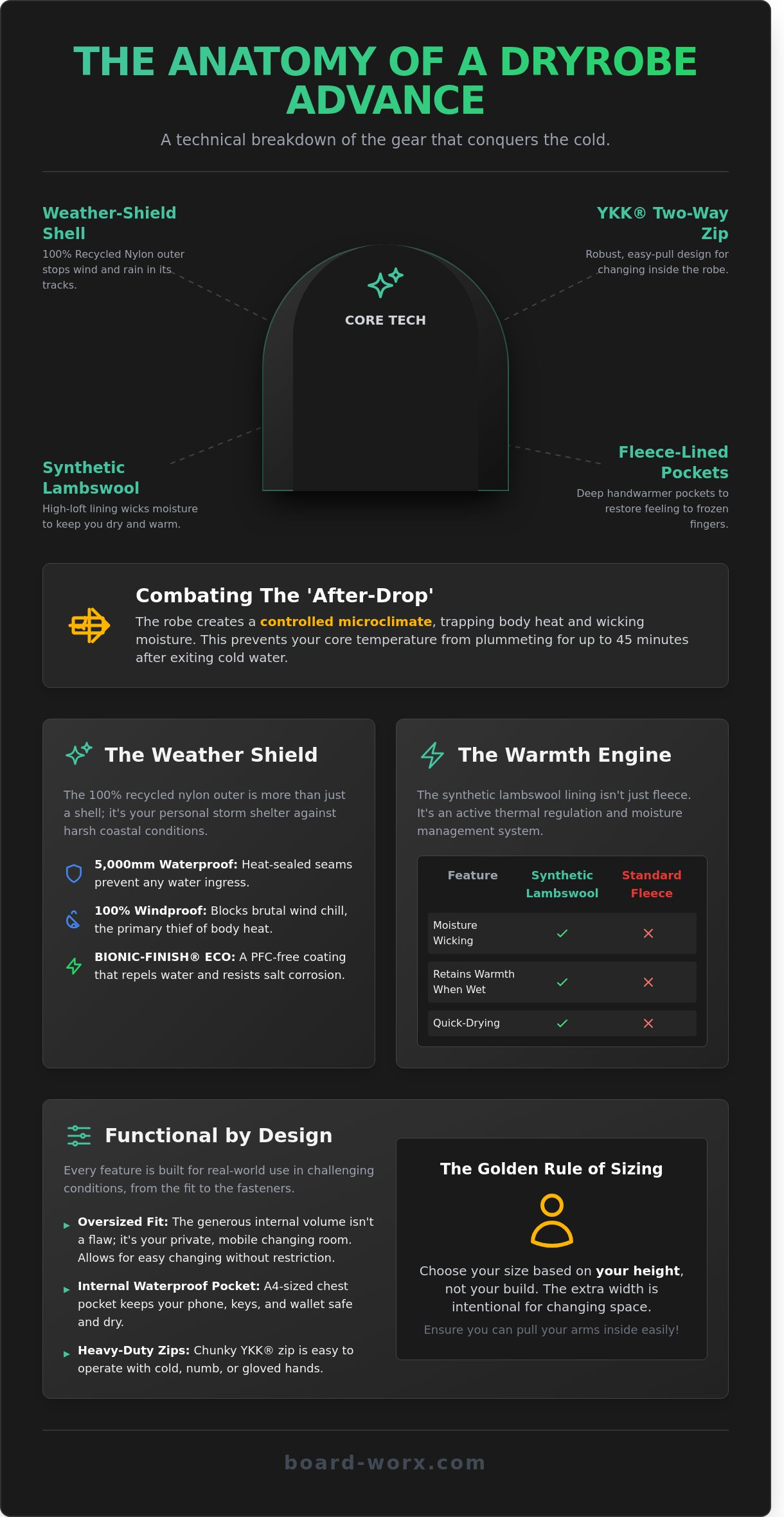
A dryrobe works by creating a controlled microclimate. Its massive silhouette traps a large volume of air warmed by your body heat, acting as a thermal buffer against the elements. The moisture-wicking lining is critical because it draws water away from the skin, stopping the cooling effect of evaporation instantly. This isn't just about comfort; it's about managing your physiology. The after-drop is a process where your core body temperature continues to fall for up to 45 minutes after exiting cold water as chilled blood from your limbs circulates back to your core.
Why the oversized fit is a feature, not a flaw
Don't mistake the bulk for poor tailoring. That extra internal volume provides a private, mobile changing room. You can pull your arms inside the sleeves to swap a 5mm wetsuit for dry clothes without flashing the entire beach. It’s about maintaining your dignity in a packed public car park while keeping the stoke high. Using a technical robe offers several practical advantages:
- Enough internal space to change quickly without restricted movement.
- Deep fleece-lined pockets to warm up numb fingers in seconds.
- A weatherproof outer that keeps your car seats dry if you're chasing the next spot.
- Heavy-duty YKK zips that you can actually operate with cold, shaky hands.
Being warm the second you zip up ensures you spend less time shivering and more time buzzing about the waves you just scored. It turns the most brutal winter sessions into something manageable and, more importantly, repeatable.
Technical Breakdown: The anatomy of a dryrobe Advance
This isn't just a coat. It's a piece of technical equipment designed to survive the harshest North Sea gales. The dryrobe Advance uses a 100% recycled nylon outer shell that provides a 5,000mm waterproof and windproof barrier. Every seam is heat-sealed. This prevents water ingress during heavy downpours or while you're standing on a windswept pier waiting for the tide to turn. The hardware is equally robust. You get heavy-duty YKK® two-way zips that allow you to pull your arms inside to change without snagging. It's this level of utility that led The Guardian on the Dryrobe phenomenon to explore its transition from specialist surf gear to a mainstream staple.
- Internal Storage: A waterproof, A4-sized internal pocket keeps your tech or dry base layers safe from the elements.
- External Pockets: Deep, fleece-lined handwarmer pockets provide instant relief for frozen fingers after a long winter session.
- Construction: The 100% recycled fabrics reflect a commitment to the environments we play in.
Materials and durability in salt-water environments
Salt water is brutal on gear. The Advance shell is specifically engineered to resist the corrosive nature of salt and the abrasive grit of beach sand. That BIONIC-FINISH® ECO coating isn't just for rain; it prevents salt crystals from embedding in the fibres. You won't need to wash this robe often. In fact, washing it too frequently can degrade the water-repellent coating. Just wipe away the mud and let it air dry. It's built for the long haul, whether you're a daily sea swimmer or a weekend warrior. Check out our latest changing robe collection to see these specs in person.
The 'Advance' lining vs. basic fleece
Standard polyester fleece gets heavy and soggy the moment it touches water. The synthetic lambswool lining used here is different. It features a high-loft construction that traps air for insulation while actively drawing water away from your skin. It's a two-way moisture-wicking process. Even after you've dried off from a soaking wet session, the lining feels dry to the touch within minutes. It maintains an incredible warmth-to-weight ratio, ensuring you don't feel weighed down when you're trying to get out of a 5mm wetsuit in a cramped van. Cheaper alternatives often stay damp for hours, leading to that dreaded cold, heavy feeling on the second use of the day.
Dryrobe vs. The Field: Comparing the best alternatives
The market has exploded since the first dryrobe hit the beach. While the original remains the benchmark, 2026 sees serious contenders like Red Original and Northcore fighting for space in your kit bag. Red Original targets the premium traveller; their EVO robe uses a refined, lighter fabric that packs down 30% smaller than the bulky Advance model. It's the choice for riders with limited van space or those flying to overseas spots. Northcore remains the direct heavyweight rival, offering a rugged, no-nonsense build that resonates with the hardcore North Sea surf crowd who value durability over bells and whistles.
Independent testing from Good Housekeeping's best dry robes of 2026 shows how these brands now compete on technical specs like hydrostatic head ratings and moisture-wicking speeds. If you only hit the water five times a year during a heatwave, a £45 entry-level robe from a brand like Sola suffices. However, for kitesurfers and wing foilers facing 30-knot gusts on a January morning, the technical gap is massive. You need a shell that won't flap like a sail and a lining that won't hold onto dampness between sessions.
Performance in extreme UK weather
Winter sessions in the UK demand elite wind-blocking. The dryrobe Advance excels here because its oversized fit creates a massive pocket of warm air around your core. Hood design is the silent deal-breaker; Northcore features a more structured peak that stays out of your eyes in a gale, while Red Original offers toggle adjustments to seal out the spindrift. If you are cramming gear into a board bag for a trip to Tiree, the Red EVO wins on weight, but for pure heat retention while standing on a frozen shingle beach, the heavier pile of the original still dominates.
Value for money and longevity
Look at the cost-per-use over a typical three-year lifespan. A £165 investment equates to roughly £1.05 per week for a year-round rider. The dryrobe brand holds its price remarkably well; used models frequently fetch 65% of their RRP on second-hand marketplaces. This high resale value offsets the initial sting. Warranty support is also a major factor. While budget brands might leave you with a stuck plastic zip after one season, established players offer repair kits or replacement zips, ensuring your robe doesn't end up in a landfill after a minor hardware failure.
Choosing Your Robe: Sizing, sleeve length, and colours
Getting the fit right is the difference between a seamless transition and a frustrating struggle in the car park. The golden rule for a dryrobe is simple: it must be oversized. This isn't a fitted parka; it's a portable changing room. You need enough internal volume to pull your arms inside the sleeves, peel off a sodden 5mm wetsuit, and get dressed without flashing the entire beach. If you look like you're wearing a tent, you've nailed it.
Managing the bulk is the only real downside to these high-performance robes. An Advance Long Sleeve model can take up 15 to 20 litres of space in your boot. We recommend using a dedicated compression bag. These technical sacks can reduce the packed volume by 40%, making it far easier to chuck your gear into a backpack for a hike to a secret spot or a flight to colder climates.
The definitive dryrobe sizing framework
Choosing your size depends entirely on your height and your sport. Swimmers often size up to ensure maximum room for changing while shivering. Surfers and foilers sometimes size down if they prioritize walking around the site or rigging gear over total internal space. Use these benchmarks for the best results:
- Height 5'2" to 5'5": The Small is usually perfect, offering enough length without dragging on the ground.
- Height 5'6" to 5'10": The Medium is the industry standard, providing ample "changing room" for most adults.
- Height 5'11" to 6'3": Go for the Large to ensure the hem stays well below the knees.
- Junior Sizing: These are built for growth. A 10-13 year size fits riders up to 5'1", providing years of use before they need an adult version.
Short sleeve vs. Long sleeve: The pros and cons
The long sleeve version is the ultimate weapon for winter. It features adjustable velcro cuffs that seal in heat, making it essential for sub-10 degree North Sea sessions. If you're standing on a windswept pier waiting for a heat to start, the full-length protection is unbeatable. It offers maximum warmth for those "frozen finger" days.
Short sleeve models are the unsung heroes of the summer circuit. They offer better airflow and make the actual changing process significantly faster because there's less fabric to navigate. Kitesurfers often prefer the short sleeve for bar resets and rigging. It gives your arms total freedom of movement to untangle lines or pump up a 12m kite without the bulk of heavy sleeves getting in the way.
When it comes to colour, think about your environment. Bright "Tarmac Grey" or "Camo" looks sharp, but high-visibility "Safety Orange" is a massive plus if you're swimming in open water and need your support crew to spot you from the shore. Darker linings like black or grey hide the inevitable mud and sand better than the lighter pink or blue options.
Ready to find your perfect fit? Shop our latest dryrobe collection and get the right gear for your next session.
Get Session-Ready with Boardworx
Choosing the right gear shouldn't feel like a gamble at a faceless warehouse. When you're standing on a freezing UK beach in mid-January, you need equipment that actually works. We aren't just shifting boxes; we're out there with you. Our team has been testing the latest dryrobe designs in the harshest Atlantic swells and North Sea winds to ensure they live up to the hype for 2026.
Our shop floor is currently packed with the fresh 2026 colourways, featuring improved recycled fabrics and weather-shielding tech that sets the standard for the season. We know these robes inside out because we use them to survive our own winter sessions. Buying from a rider-owned specialist means you get authentic feedback on how the outer shell handles salt spray and how the inner lining manages moisture after a heavy shred.
Don't guess your size based on a generic chart. These robes are designed to be oversized for easy changing, but there's a fine line between "roomy" and "tripping over the hem." Give us a call at the shop. We've helped thousands of riders find the perfect fit based on their height, build, and specific sport. Whether you're bulky from a thick 5/4mm wetsuit or need something streamlined for fast transitions, we'll get you sorted.
The Boardworx 'Tested by Riders' promise
We've been supporting the UK watersports community since 1982. That represents 44 years of salt-water expertise brought directly to your kit bag. We only stock the gear we trust for our own sessions; if it doesn't survive a rugged coastal winter, it doesn't make the cut. Our goal is to help you organise your kit efficiently so you spend less time shivering and more time on the water. We understand the logistics of a cold-water session because we live it every day.
Next steps for your winter warmth
Grab the ultimate protection against the elements today. Our inventory includes the full 2026 dryrobe lineup alongside essential neoprene accessories like 7mm boots and thermal gloves to complete your winter armour. We provide fast national delivery across the UK to ensure you're ready for the next incoming swell without delay.
- Explore the latest 2026 colourways and limited editions.
- Benefit from 44 years of specialist industry knowledge.
- Fast, reliable shipping to any UK coastal or inland location.
Shop the full Dryrobe collection at Boardworx and make your next session the warmest one yet.
Secure Your Ultimate Session Finisher
Staying warm isn't just about comfort; it's about recovery and readiness for your next set. The 2026 dryrobe Advance holds its crown because the technical specs don't lie. With its 100% recycled nylon shell and a 10,000mm waterproof rating, it provides the vital thermal barrier needed when the British wind chill hits. We've seen dozens of brands attempt to mimic the moisture-wicking fleece, but few match the durability required for daily coastal use. Our team at Boardworx has spent 15 years testing gear in real conditions to ensure you get the right fit the first time. We maintain an extensive range of UK stock ready for immediate dispatch, so you won't be left shivering on the shingle. If you're unsure about the jump between sizes, our crew provides expert sizing advice straight from the shop floor to guarantee your kit performs as hard as you do.
Upgrade your post-session comfort with a Dryrobe from Boardworx
Grab your gear, hit the water, and we'll see you out there for the next epic swell.
Frequently Asked Questions
Is a dryrobe waterproof enough to wear as a rain coat?
Yes, the dryrobe Advance features a BIONIC-FINISH ECO water-repellent coating and a 10,000mm waterproof rating, making it more capable than most standard raincoats. It's designed to withstand torrential downpours while you're waiting for the sets to roll in. The heat-sealed seams ensure you stay bone dry even during an 8 hour day at a rain-soaked event. It's the ultimate shield for the unpredictable British weather.
Can I wash my dryrobe in a washing machine?
You can wash your dryrobe in a machine, but you should only do it when absolutely necessary to preserve the waterproof coating. Use a cold wash at 30°C or lower with a non-biological detergent to keep the fabrics in top condition. Never use fabric softener, as this clogs the moisture-wicking synthetic lambswool lining and ruins its performance. Most of our team only wash theirs twice a year, opting to wipe off mud with a damp sponge instead.
What is the difference between a towel robe and a dryrobe?
A towel robe is a basic cotton poncho for drying off in summer, while a dryrobe is a technical piece of performance gear. The dryrobe Advance uses a weather-proof outer shell and a synthetic lambswool lining that draws water away from your skin. While a towel robe gets heavy and cold when wet, this technical garment maintains its thermal properties. It's the difference between a basic beach accessory and a 100% essential piece of winter kit.
How do I choose the right size dryrobe if I am between sizes?
Go with the smaller size if you plan to wear it primarily as a coat, but stick to your measured size if you need room to change. These robes are designed to be oversized so you can pull your arms inside to swap out of a 5/4mm wetsuit without a struggle. If you're 5'8" and between Medium and Large, the Medium provides a sleeker fit while still offering enough volume for a quick transition. Don't size up too much or you'll lose valuable body heat.
Is the dryrobe Advance suitable for ironman and triathlon transitions?
Absolutely, the dryrobe Advance is the gold standard for triathlon transitions and has been a common sight at Ironman UK events since 2010. The oversized fit and two-way YKK zip allow you to strip off a damp tri-suit without exposing yourself to the elements. It keeps your core temperature stable during that critical gap between the swim and the bike leg. Every second counts in a race, and staying warm prevents the muscle cramps that ruin a personal best.
Can I leave my dryrobe in the car during winter?
You can leave it in the car, but ensure it's dry before you lock up for the night. Leaving a damp robe in a cold vehicle leads to condensation and that dreaded musty smell that's hard to shift. If you're heading out for a 6:00 AM surf session, keeping your robe in the house ensures the inner lining is warm when you put it on. A cold robe takes significantly longer to trap your body heat when you're shivering post-session.
Why is the dryrobe so expensive compared to other brands?
The £165 price tag reflects the premium materials and 15 years of design evolution that cheaper alternatives simply lack. You're paying for a 10,000mm waterproof shell, recycled fabrics, and a zip that won't jam after 3 months of salt-water exposure. Cheaper robes often use thinner linings that lose their loft and warmth after a few uses. When you're freezing after a winter session, the extra £40 spent on a genuine dryrobe feels like the best investment you've ever made.
Does the dryrobe come with a compression bag for travel?
No, the dryrobe doesn't include a compression bag as standard, but you can purchase the dedicated Compression Travel Bag for £29.95. This accessory reduces the bulk of your robe by 40%, making it much easier to pack into a 30-litre backpack or a cramped car boot. Without it, the thick lining takes up a lot of space in your luggage. It's a must-have for riders heading on overseas trips or weekend van missions where space is at a premium.