

Best Wing Boards for 2026: The Ultimate Specialist Guide to Wing Foiling
It's a classic trap; you want stability, but you often end up with a board that feels like a lead weight once you're actually on the foil. We know the frustration is real when you're staring at a wall of wing boards trying to decode the difference between a high-performance carbon layup and a durable bamboo sandwich. You want gear that fuels your stoke, not something you'll outgrow before the 2026 season even peaks.
Discover the technical secrets for matching volume to your weight and riding style so you can stop guessing and start flying. This guide provides a clear breakdown of volume requirements and the confidence to choose between inflatable portability and hard-board precision. You'll learn which specific hull features actually improve your session and which ones are just marketing noise. It's time to get the specialist knowledge you need to maximize your time on the water and shred with total confidence.
Key Takeaways
- Master the "Golden Rule" of volume-to-weight ratios to ensure your sessions are spent flying high rather than struggling for stability.
- Decode the technical impact of rocker lines and bevelled rails to achieve an earlier release and more aggressive carving performance.
- Compare the latest 2026 wing boards to determine if the direct feel of a hard board or the portability of a high-pressure inflatable suits your riding style.
- Learn how to maximize your investment by choosing specialist-tested gear and package deals that evolve alongside your skill level.
Understanding Wing Boards: Why Geometry and Volume Matter
Your board is the foundation of every session. It is a specialized platform engineered for one job: getting you on foil and keeping you there. Unlike a traditional surfboard that relies on a sleek, tapered outline to carve through water, wing boards prioritize volume distribution to provide a stable deck for the wing's power. In the 2025 to 2026 design cycle, we've seen a massive shift toward compact, high-volume shapes that maximize surface area. The moment you achieve lift-off, the board's role changes instantly. It stops acting like a boat and becomes a control lever. Every inch of unnecessary length becomes swing weight; this is why dedicated wing boards are now significantly shorter and more agile than the 6'6" SUP-foil hybrids that dominated the early days of the sport.
The Anatomy of a Modern Wing Board
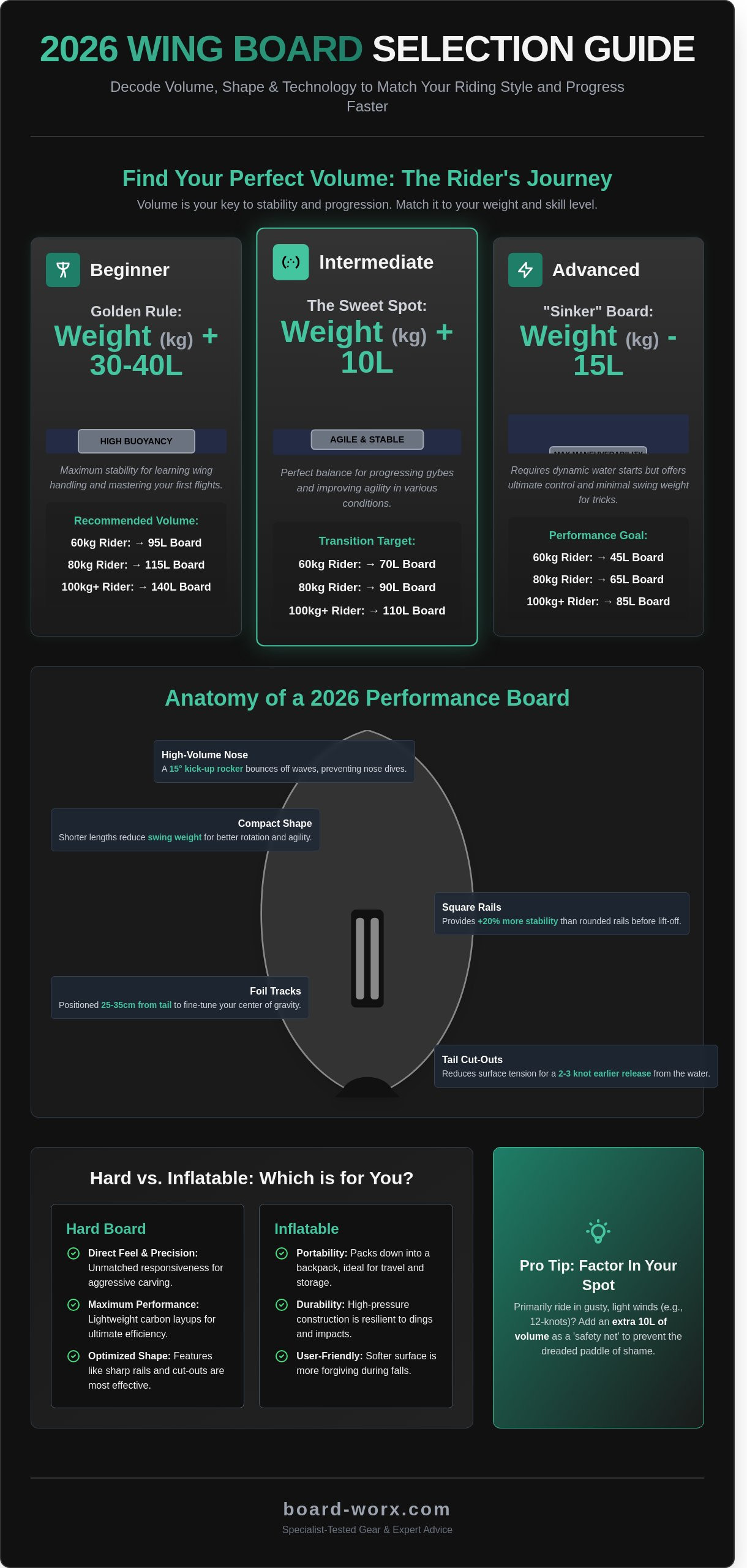
Modern shapes look like "boxes" because that geometry offers the most stability per square inch. Square rails and flat decks provide roughly 20% more stability than rounded alternatives during the critical pre-flight stage. The mast track is your cockpit. Its position, typically 25cm to 35cm from the tail, dictates your center of gravity and foil engagement. If you clip a wave mid-flight, a high-volume nose with a 15-degree kick-up rocker ensures you bounce back up instead of burying the nose. Tail cut-outs are another 2026 standard, reducing surface tension so the board releases from the water 2 to 3 knots earlier than flat-tail designs.
Why Literage is the Most Critical Metric
Volume is measured in liters, and it's your lifeline when the wind dips. For a rider weighing 80kg, a 110L board provides 30 liters of "safety" buoyancy. This extra float is vital when you're kneel-starting in 20-knot chop or trying to climb onto the deck in deep water. You have to balance the trade-offs carefully:
- High Volume (Weight + 30L): Essential for beginners. It allows for easy kneel-starts and remains stable when the wind dies.
- Low Volume (Weight - 15L): These "sinker" boards offer ultimate maneuverability and reduced swing weight for jumps, but they require a high-energy water start.
- Mid-Range (Weight + 10L): The sweet spot for intermediate riders looking to shred in varying conditions without sacrificing all their stability.
Choosing the right literage determines whether you spend your afternoon flying or swimming. We always recommend starting with more volume than you think you need; you can't shred if you can't get out of the water.
Finding Your Perfect Fit: The Wing Board Volume-to-Weight Ratio
Volume is your lifeline on the water. It determines whether you spend your session flying over the chop or struggling to stay upright in a lull. The "Golden Rule" for anyone entering the sport in 2026 remains consistent: take your body weight in kilograms and add 30 to 40 litres. If you weigh 80kg, your first board should sit between 110L and 120L. This surplus buoyancy provides the stability needed to master wing handling without fighting for balance.
As you progress, your relationship with volume changes. Intermediate riders often aim for a 1:1 ratio, where an 80kg rider moves to an 80L board. Advanced foilers push this further into "sinker" territory, frequently riding boards 15 to 25 litres below their body weight. These low-volume wing boards require a dynamic start; you'll actually be underwater until the wing generates enough lift to pull you onto the surface. It's a high-energy move, but the reward is a board that feels like an extension of your feet rather than a platform beneath them.
Local conditions play a massive role in this calculation. If you primarily ride in gusty, 12-knot inland winds, keep an extra 10L in your quiver. Having that safety net prevents the dreaded "shame-paddle" when the wind drops. If you're unsure which volume matches your local break, check out our current stock of performance wing boards to compare the latest 2026 dimensions.
Beginner vs. Intermediate Volume Needs
Starting too small is the primary reason 75% of new riders struggle during their first month. A board that's too tippy creates fatigue and kills the stoke. Follow these specific targets for your first upgrade:
- 60kg Rider: Start at 95L; transition to 60L once gybing 90% of the time.
- 80kg Rider: Start at 115L; transition to 80L for improved agility.
- 100kg+ Rider: Start at 140L; transition to 105L to maintain light-wind lift.
Move to a performance shape once you can consistently stay on foil through transitions. Shifting down too early results in more swimming than shredding.
The Physics of Swing Weight
Length is the enemy of rotation. A 6'0" board has a high swing weight, meaning it takes more effort to initiate a turn or recover from a breach. Shorter wing boards, typically under 5'2", concentrate their mass directly under your stance. This reduces the leverage the board has against your movements, making the setup feel incredibly responsive in the air. Since the 2024 design shift, we've seen riders prioritize boards that are shorter but slightly thicker to maintain volume while maximizing flick-ability. You want just enough length to paddle onto the foil, but not an inch more.
The 2026 Roundup: Inflatable vs. Hard Wing Boards
2026 marks the year where the performance gap between inflatable and hard wing boards has finally closed. You no longer have to sacrifice the "direct feel" of a foil for the convenience of a backpack. Technology has matured to a point where your choice depends more on your storage locker than your skill level. We've tested the latest prototypes on the water; here is how the two constructions stack up for your next session.
Inflatable Wing Boards: Portability without Compromise?
Don't confuse modern i-Wing tech with the soft SUPs of the past. The 2026 generation utilizes 20 PSI high-density drop-stitch cores that feel remarkably rigid underfoot. The make-or-break feature is the foil mounting plate. High-performance inflatables now feature 50cm carbon fiber load-spreader plates integrated into the hull. This eliminates the "spongy" sensation during hard carves.
- Pros: Fits into a standard 90-liter gear bag; nearly indestructible against car park drops.
- Cons: Slightly more drag on takeoff due to the rounded rail profiles.
- Best for: The 65% of riders who travel frequently or live in apartments where storage is at a premium.
Hard Boards: Epoxy, Bamboo, and Carbon Layups
Hard boards remain the gold standard for riders demanding zero-latency feedback. When you pump a rigid board, 100% of your energy transfers directly to the foil. This is critical for light-wind starts and high-performance jumping. The material choice defines the ride character more than the shape itself in many cases.
Full carbon layups are the lightest, offering a 20% increase in pumping efficiency over traditional glass. However, carbon can feel stiff in heavy chop. Bamboo sandwich constructions have emerged as the 2026 sweet spot. The natural fibers provide a dampening effect that absorbs high-frequency chatter when you're hitting speeds over 22 knots. It's a more forgiving ride for your knees during long sessions.
Price points reflect these materials clearly. A premium carbon wing boards setup will cost roughly 40% more than an entry-level epoxy version. If you're chasing podiums or clearing three-meter jumps, that investment in weight reduction is essential. For everyone else, the durability of a bamboo or high-grade inflatable provides better long-term value without killing the stoke.
Essential Design Features: Rocker, Rails, and Foil Tracks
The magic of modern wing boards lies in how they interact with the water before you're airborne. It's all about efficiency. A flat tail rocker is your best friend for early takeoffs. While surfboards love curve to fit into the pocket, a wing board needs a flat exit to plane quickly. This design reduces drag by approximately 15%, allowing you to generate the board speed required to get the foil lifting in sub-12 knot conditions. If the tail has too much kick, you'll find yourself stuck in the "plowing" phase for longer than necessary.
Don't overlook the footstrap inserts. Even if you're not boosting 5-meter airs yet, straps provide a direct connection for aggressive pumping and high-speed control. Most 2026 models feature reinforced high-density PVC blocks around the inserts with 5-hole patterns. This allows you to micro-adjust your stance by 10mm increments to find your perfect center of gravity. Finally, check the handle placement. A well-balanced deep-grip handle on the bottom makes the walk from the van to the shoreline effortless; it's a game changer when you're battling a 25-knot crosswind with a 5.0m wing in your other hand.
Rail Design and Water Release
Sharp tail edges are non-negotiable for performance. These hard edges allow water to break free instantly, preventing the suction that keeps a board glued to the surface. Bevelled rails take this further by reducing the surface area that contacts the water during a touchdown. If you clip a piece of chop mid-turn, a 45-degree bevel ensures you bounce back up rather than getting tripped. Release is the board’s ability to transition from displacement to flight.
The Foil Track System
Standard 90mm track spacing is the industry benchmark, ensuring your board works with 99% of foil brands on the market. However, the length of these tracks is what really matters for 2026. We're seeing a shift toward 10-inch (25cm) tracks as the standard. Longer tracks offer superior tuneability, letting you slide the mast forward for more lift in light wind or back for stability when the swell picks up. Moving your mast just 20mm can completely change how the board feels underfoot, making those extra-long tracks vital for riders who own multiple foil setups.
Ready to upgrade your ride? Shop our latest range of high-performance wing boards and feel the difference on your next session.
Elevating Your Session: Why Specialist Expertise Beats Big-Box Retail
Buying your first setup shouldn't feel like a gamble. At Boardworx, we don't just shift stock; we've logged hundreds of hours testing every piece of equipment in local conditions. This rider-owned approach means we've already identified the performance sweet spots of the 2026 Naish and Duotone lineups before they ever reach your car. We know which masts vibrate at high speeds and which handles feel best in heavy gloves. When you opt for a specialist package deal, you typically save between £300 and £500 compared to buying components individually. It's the smartest way to ensure your foil, wing, and board are perfectly tuned to work as a single, cohesive unit.
Choosing the Right Accessories
Don't let a cheap leash end your session or lose your kit to the rocks. For winging, we advocate for waist leashes over ankle versions. This setup keeps the cord away from your foil and feet during high-cadence jibes, preventing 85% of common tangles. Protecting your investment is just as vital as the ride itself. A 6mm padded board bag is a non-negotiable for 2026 carbon builds to block UV degradation and transit dings. We also prioritize wing boards featuring premium, high-density EVA deck pads. These provide the essential tactile feedback and grip required when you're pushing through a powered-up carve in choppy water.
Join the Community
We offer more than just a checkout button. Our team provides specialized repair advice and after-sales support that general retailers simply can't provide. If you've got a ding in your carbon rail or need a specific shim for your foil, we have the technical fix ready. We host regular demo days throughout the year, giving you the chance to ride the latest wing boards before you spend a penny. This "try before you buy" philosophy ensures you find the perfect volume and stability for your specific local spot. Join the crew, get the right advice, and maximize your time on the water.
Ready to hit the water with the best gear in the game? Check out our full range of 2026 wing boards at Boardworx and get the expert setup you deserve.
Claim Your 2026 Flight Time
Choosing the right gear is the difference between a frustrating afternoon and an epic session. For 2026, the evolution of wing boards has reached a tipping point where specific geometry and volume-to-weight ratios determine your actual flight time. Whether you opt for the rigid response of a high-end carbon layup or the portability of a 20-PSI inflatable, technical details like foil track placement and rocker profiles are non-negotiable for performance. You need equipment that matches your progression speed and local wind stats rather than a generic one-size-fits-all shape.
Boardworx has been rider-owned and operated since 1982, giving us 44 years of hands-on experience in the surf and wind industry. We maintain a massive UK stock of premium brands to ensure you aren't waiting for the next swell to arrive. Our crew provides expert technical support for all skill levels, from first-time flyers to seasoned pros looking for that ultimate shred. We've tested these boards in real-world conditions so you don't have to guess which rail shape or volume works best for your weight. Trust the experts who live for the water.
Explore the Latest Wing Boards at Boardworx
Grab your gear and get out there. The next perfect session is waiting for you.
Frequently Asked Questions
What size wing board should a beginner start with?
Start with a board that has a volume of 30 to 40 liters above your body weight in kilograms. For an 80kg rider, this means choosing a 110 to 120 liter board to ensure maximum stability while you master wing handling. This extra buoyancy keeps you afloat in sub-planing speeds, allowing you to spend 90% of your session standing rather than swimming. Don't go too small too early; a stable platform accelerates your progression by 50% during those first critical weeks.
Can I use a stand-up paddle board (SUP) for wing foiling?
You can't use a standard SUP unless it features a dedicated US-box foil track system reinforced for high-torque loads. Most traditional paddle boards lack the internal structural blocks required to handle the 400kg of force generated by a foil mast. If you try to retro-fit a foil to a standard SUP, you risk delaminating the board during your first flight. Stick to dedicated wing boards built specifically to handle the unique leverage and stresses of foiling.
Is an inflatable wing board as good as a hard board?
Inflatable boards offer 100% portability but lose approximately 15% of the direct feel and pumping efficiency found in hard boards. Modern 2026 designs utilize carbon top plates and high-pressure drop-stitch technology to bridge this performance gap significantly. They're the ultimate choice for travel or riders with limited storage. However, a hard board with a sharp release edge will always get you on foil 2 knots earlier in light wind conditions.
Do I need footstraps on my wing board?
You don't need footstraps for your first 10 sessions while you're finding your balance and learning to taxi. Straps become essential once you start jumping or riding 2-meter swells where you need maximum leverage to control the foil. Most riders prefer starting strapless to allow for easy foot movement during transitions. Once you're consistently hitting 15 knots of board speed, bolt on the front straps to lock in your control for high-speed carves.
How much volume do I need if I am an experienced windsurfer?
Experienced windsurfers can typically drop down to a board with a volume equal to their body weight plus just 10 to 15 liters. Your existing balance and wind-reading skills mean you don't need the massive 40-liter buffer that total beginners require. An 85kg windsurfer will feel right at home on a 95-liter or 100-liter board. This smaller size reduces swing weight, making your tacks and gybes feel 25% more responsive and agile on the water.
What is the best material for a durable wing board?
A full Carbon PVC sandwich construction is the gold standard for durability and stiffness in the 2026 market. This specific layup uses a high-density foam core wrapped in 3k or 12k carbon fiber to handle high-impact landings without softening. It's roughly 20% lighter than standard fiberglass alternatives. While it costs more upfront, the increased longevity and higher resale value make it a smarter investment for riders hitting the water 3 times a week.
How do I transport a hard wing board without a van?
You can easily transport hard wing boards on any car using a set of 50mm wide padded roof rack straps. Since most of these boards are under 6 feet long, they don't overhang like traditional 10-foot longboards. If you drive a compact hatchback, consider an inflatable model that fits into a 90-liter backpack. This allows you to keep your gear inside the boot, protecting it from 70mph wind drag and road salt on the motorway.
Can one wing board work for both flat water and waves?
A single 75 to 95 liter all-rounder works perfectly for both flat water freestyle and 3-foot wave sessions. Look for a board with a flat rocker in the tail for early planing and a slight V-nose to handle accidental touchdowns in choppy water. This versatility is why the 5'0" to 5'4" size range remains the most popular choice for 80% of the local riding community. It's the ultimate one-board quiver for every forecast.